Controlled evaluation · Not publicly launchedAISSEE Learning
A father’s concern became a learning application.
A structured learning system created to help a capable child participate, practise and improve without turning every study session into pressure or conflict.
The observed problem
My son was preparing for the All India Sainik Schools Entrance Examination, Class VI. He was capable of learning, but he was not naturally interested in spending long periods reading preparation books.
Instead of continuing to remind him to study, I asked whether the preparation experience could be redesigned so that a child would want to participate, practise and improve.
The design response
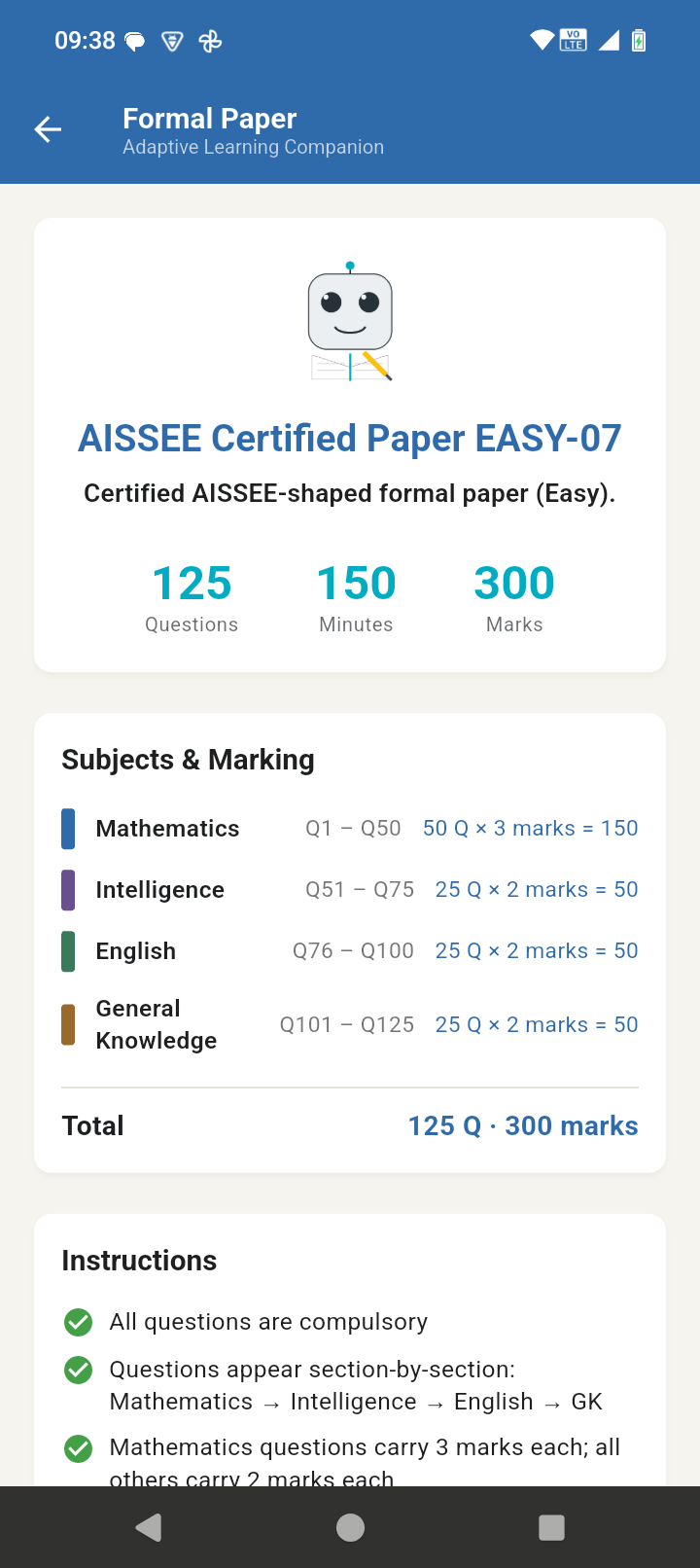
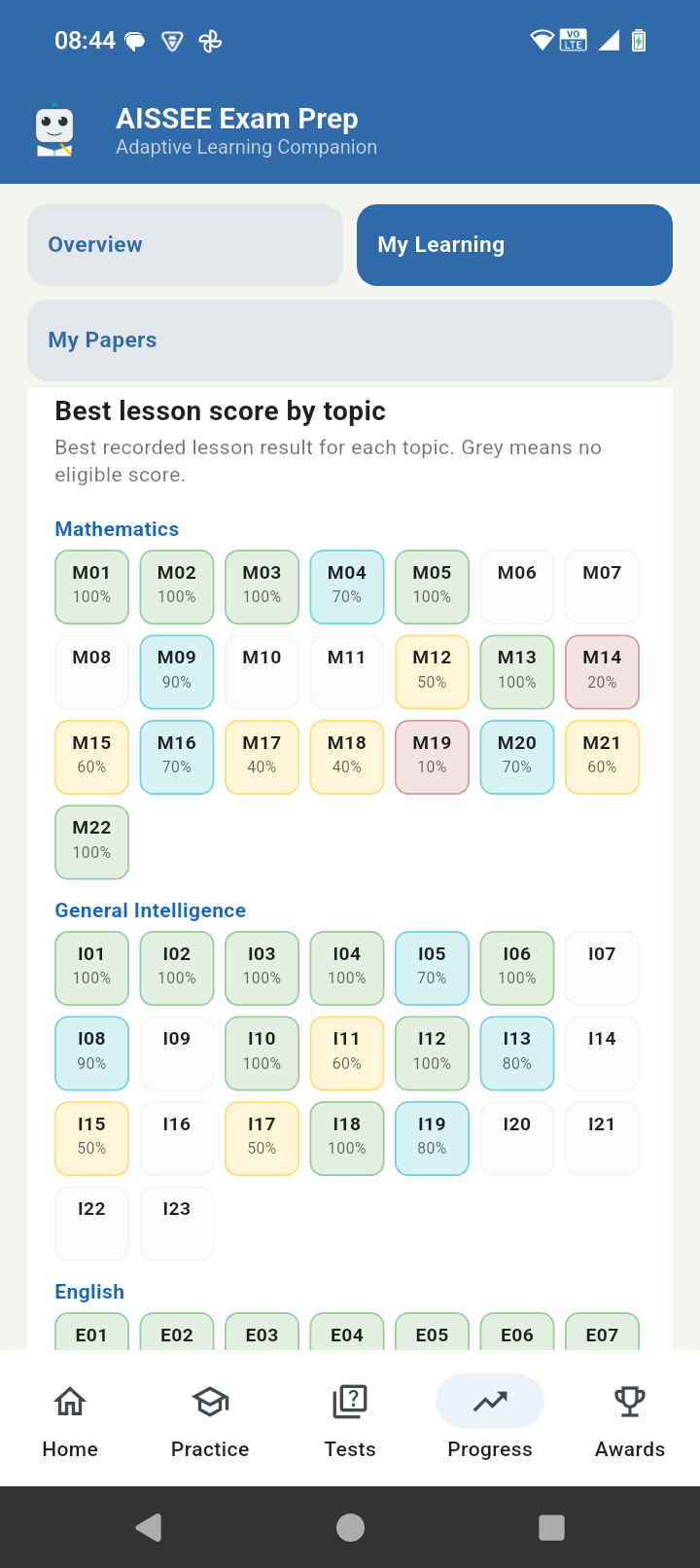
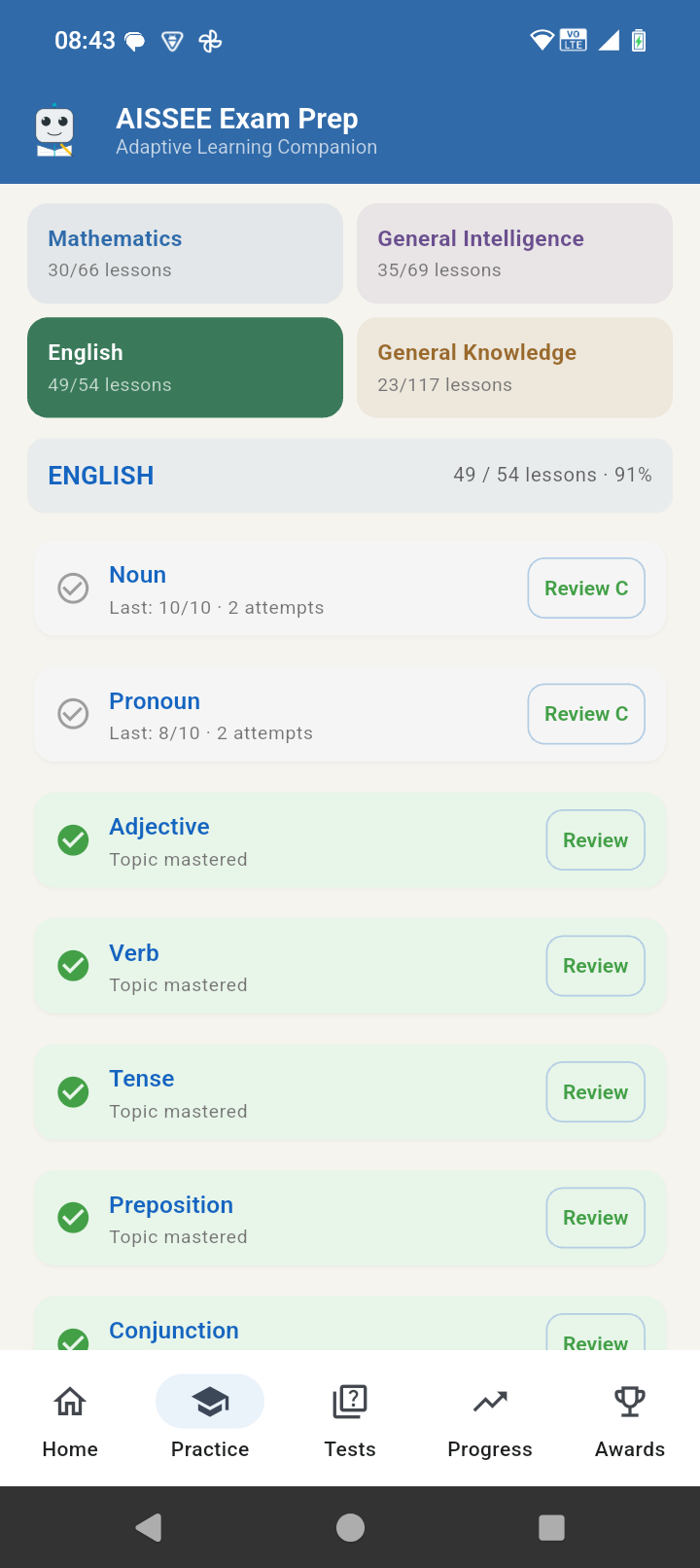
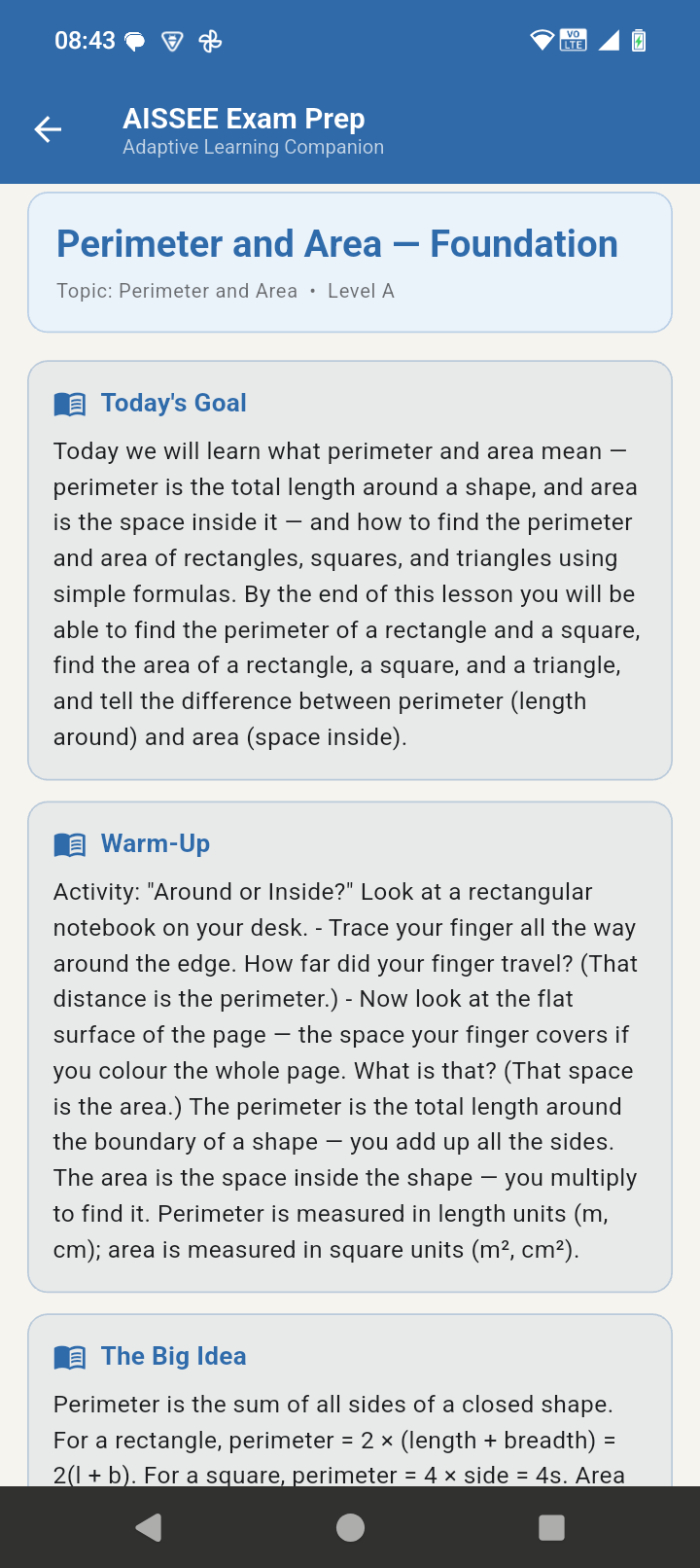
The project developed into a connected system covering Mathematics, Intelligence, English and General Knowledge.
102
syllabus-aligned topics
306
structured lessons
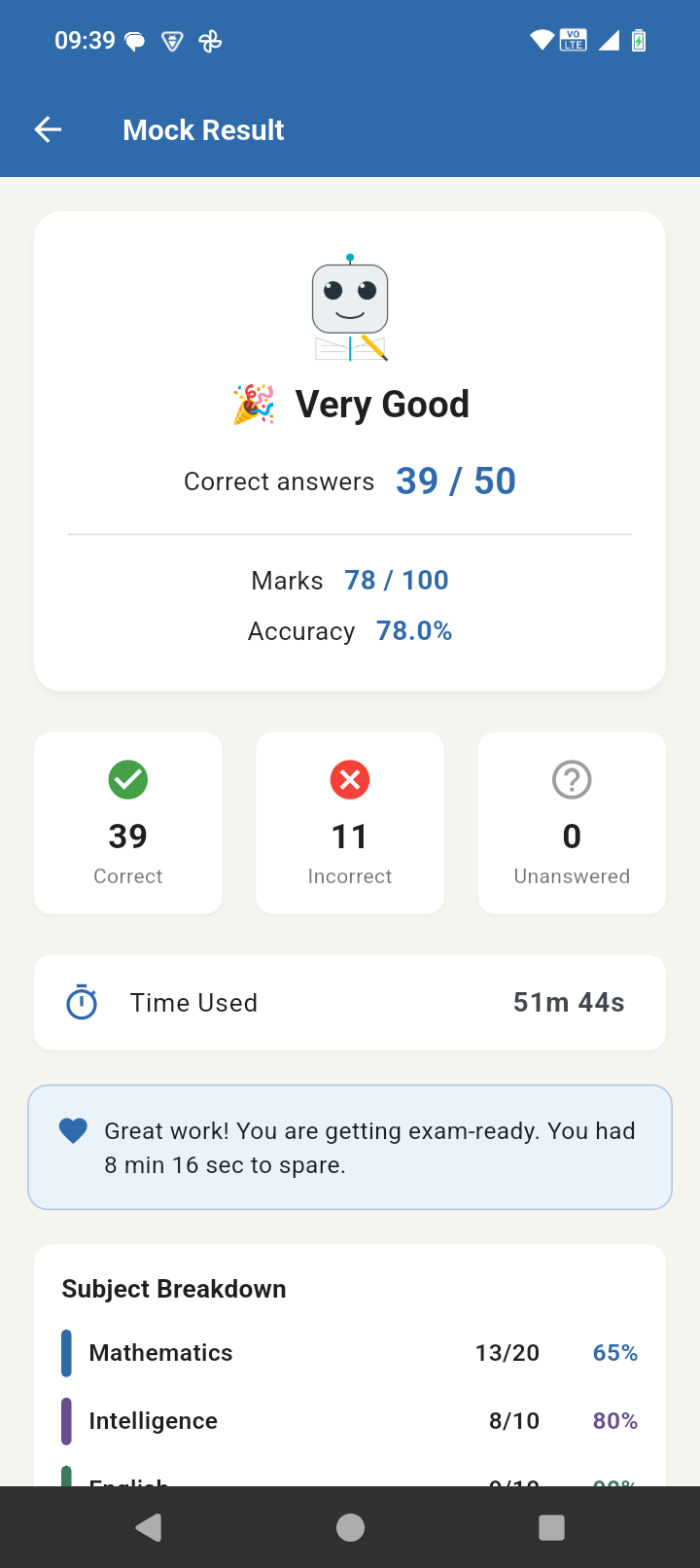
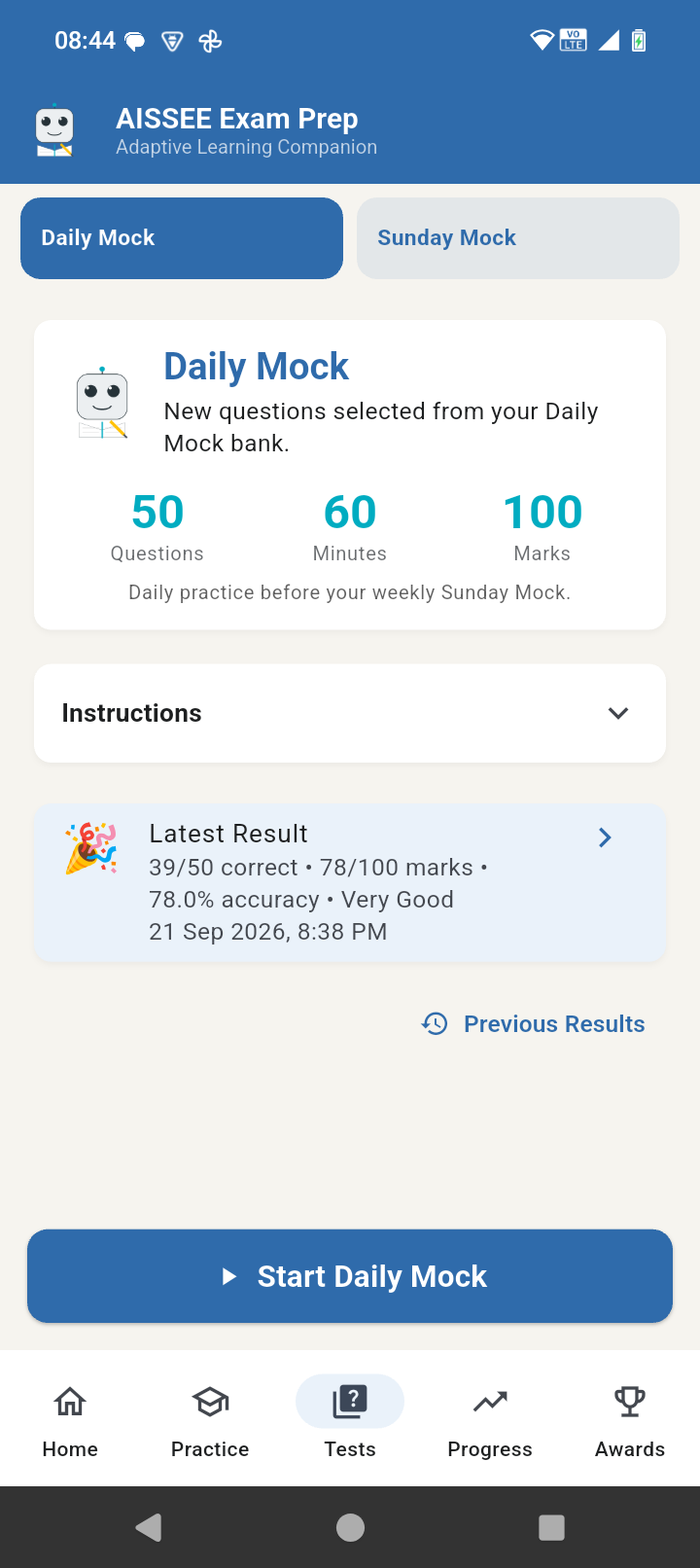
50 questions
in a Daily Mock
125 questions
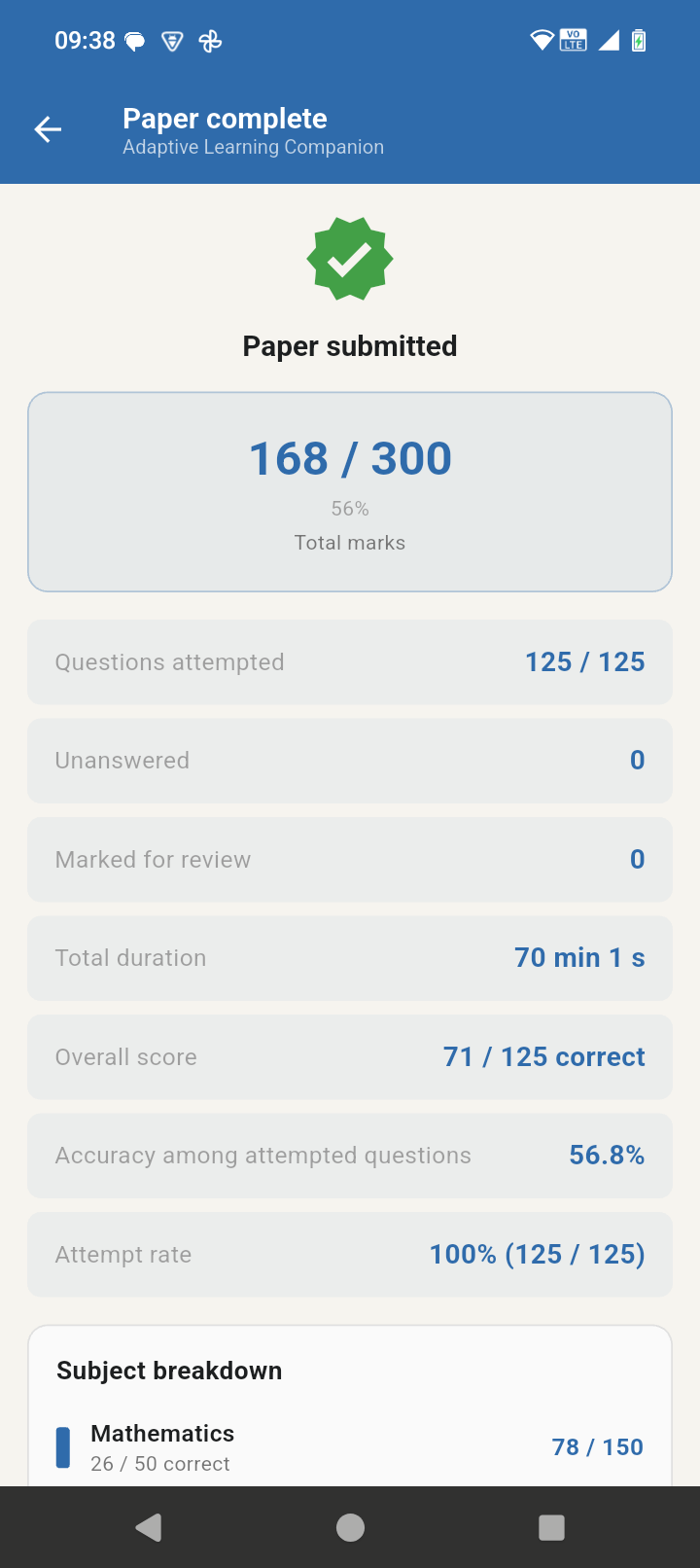
in a full Sunday Mock
Important decisions
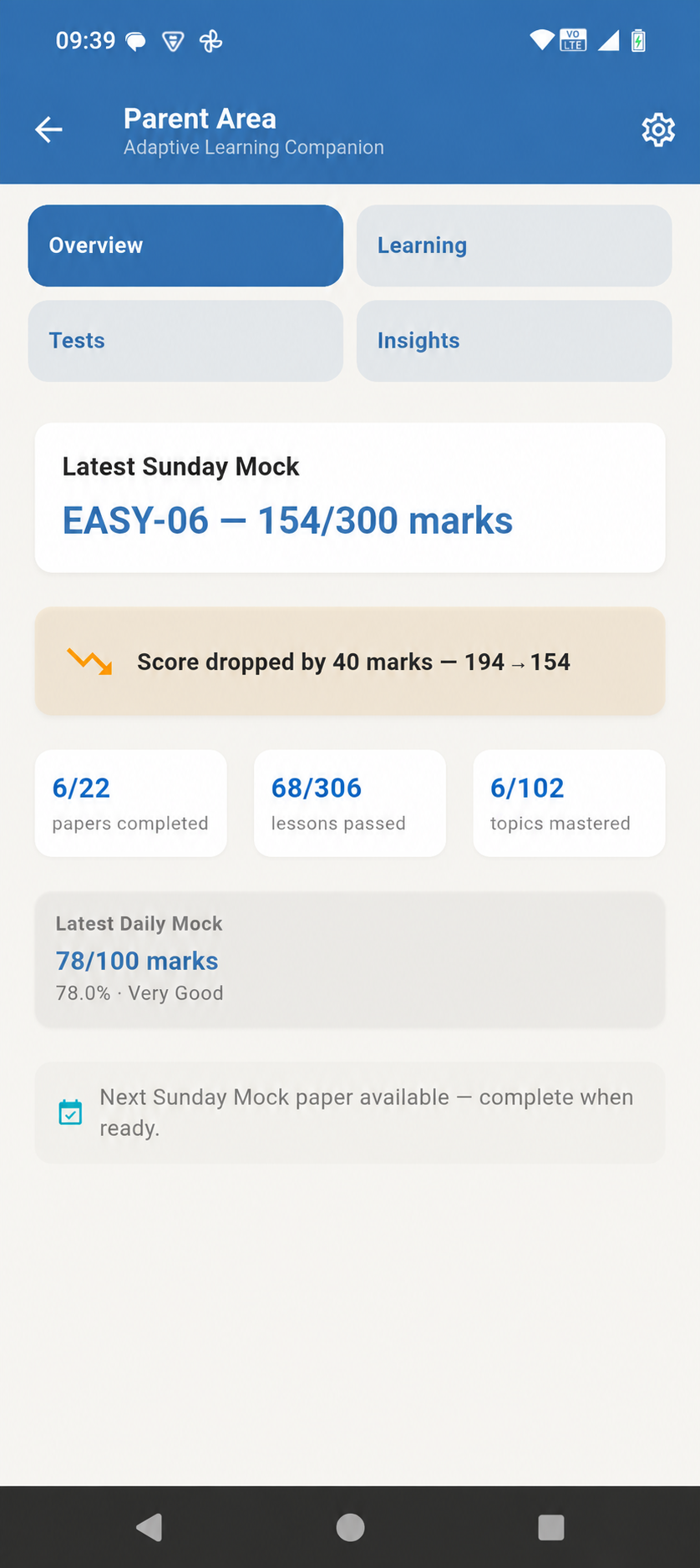
- The learner does not see the answer key; the parent can review answers and performance.
- Mastery must be earned through demonstrated performance.
- Missing evidence must never be misrepresented as zero achievement.
- Daily and Sunday Mock evidence remains distinguishable.
- Duplicate-question controls protect the quality of practice.
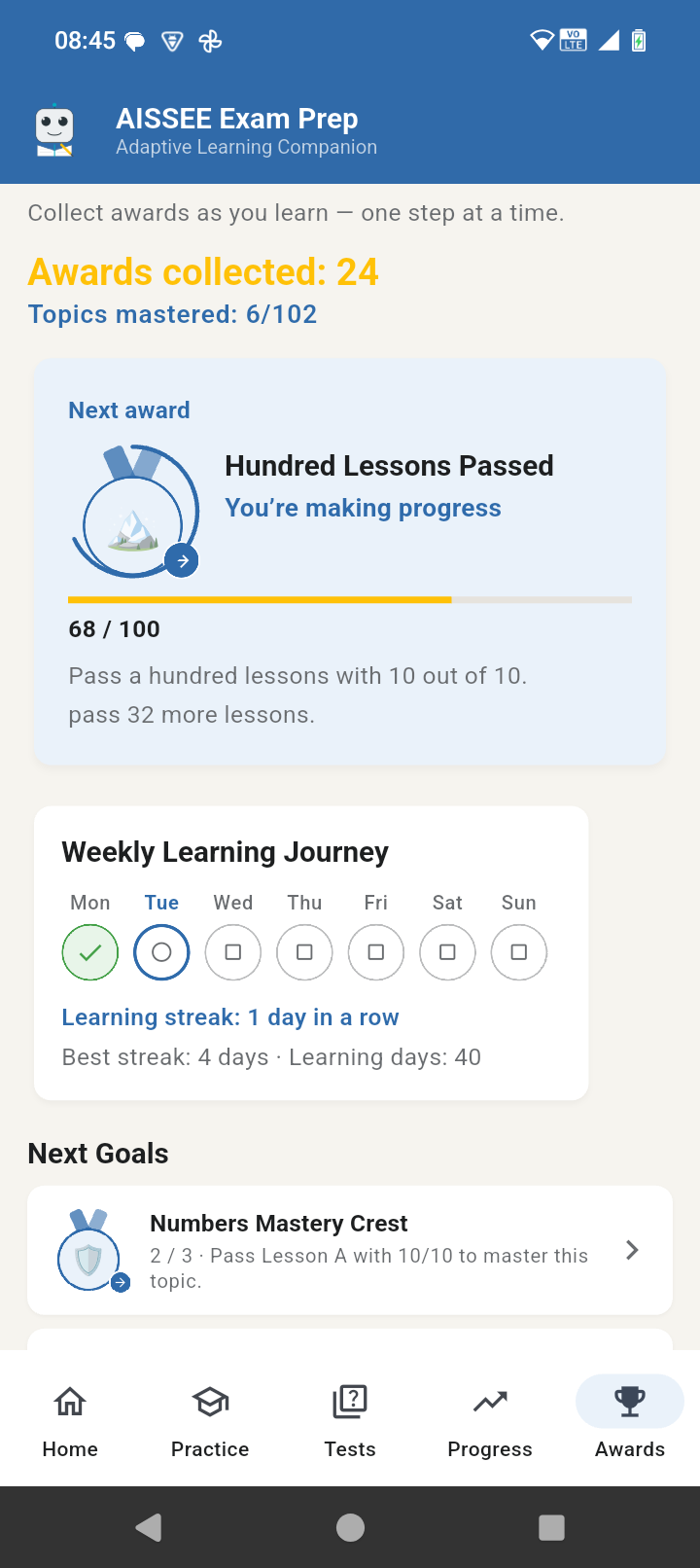
- Awards and progress journeys encourage return without replacing learning.
What the work taught me
Technically correct software is not automatically a good learning product. Children need clarity, encouragement, visible progress and meaningful reasons to return. Parents need truthful evidence rather than unexplained scores. AI-assisted development can accelerate work, but curriculum decisions, child experience, analytics and release readiness still require human judgment.
Evidence boundary
The application is undergoing controlled evaluation. It is not an official AISSEE or Sainik Schools product, is not publicly launched, and no examination-result improvement is claimed at this stage.
Next validation step
The next stage is constructive evaluation with educators, parents, school leaders and learning-design professionals before any broader pilot or release decision.